




Where to Start in a Streaming Catalog of Classic Films
Start in a streaming catalog of classic films, indie gems, and foreign movies fast: use categories, Mosfilm HD picks, and subtitles to skip endless scrolling.

Quick Answer
- Filter 4,000+ free films by categories like Comedy & Drama and Film Noir instead of scrolling endlessly
- Start with Mosfilm’s official YouTube channel for 70 HD films by Tarkovsky, Eisenstein and Kurosawa
- Click CC for subtitles to instantly enjoy foreign films like A Hunting Accident and Afonya
Use Categories to Cut Through a Catalog of Thousands
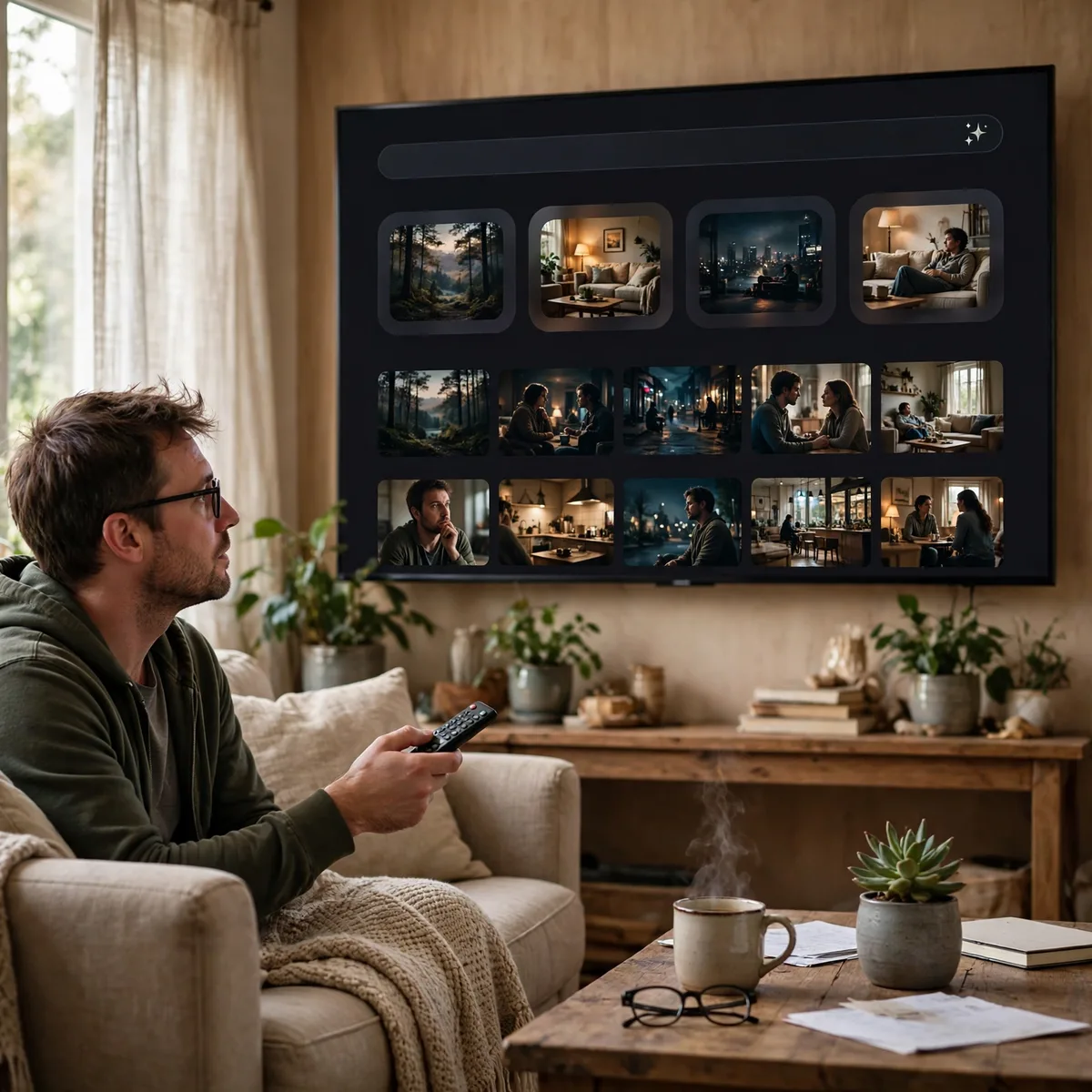
A list of 4,000+ movies sounds like a gift until you actually try to pick one. Scroll long enough and every title starts to blur together — classics next to indies, film noir next to documentaries, work from some of our greatest actors, actresses and directors sitting side by side with no obvious starting point. That scale is the whole appeal of the collection, but it is also why most people give up before they press play. Categories fix that problem, not by shrinking the catalog, but by giving you a first decision that is much easier than choosing a film.
Start with the broadest split. Comedy & Drama is the natural landing spot if you want story and performance first, without committing to a specialist corner of film history. It is also the most dangerous category for endless browsing, precisely because it is so broad, so set a tighter rule before you open it: a mood, a running time you can actually manage that night, or a preference for a classic over an indie. A small constraint inside a big category does more work than another twenty minutes of scanning posters.
The more specific shelves reward a different approach. Film Noir, Horror & Hitchcock puts mood ahead of era — dark, tense, unsettling, carefully constructed. If that is the feeling you are after, stay inside that lane instead of jumping back to the main list every time a title looks unfamiliar. Westerns, many with John Wayne, and Martial Arts Movies work the opposite way. They are genre promises. You already know the kind of action, setting, and rhythm you are signing up for, which makes them reliable picks when you do not want to gamble on something experimental.
Silent Films and Animation deserve to be treated separately because they are defined by form as much as by story. A silent film is not just an older drama, and animation is not just a lighter alternative to live action. Choosing one of those categories is choosing how you want to watch, not only what you want to watch. That distinction helps on nights when a conventional feature feels like too much talking, too much plot, or simply the wrong texture for your attention span.
Documentaries sit apart for an even simpler reason: intent. You open that category when you want to come away knowing something you did not know before, not when you are hoping a story will carry you along. Mixing documentaries into a general browse muddies both decisions. Keep them on their own shortlist, tied to a subject you are already curious about, and you will pick faster and remember more of what you watched. The same logic applies in reverse — if learning feels like homework that evening, skip the category entirely and do not feel guilty about it.
A practical routine helps more than taste alone. Pick one category, shortlist three titles at most, then stop browsing and choose from those three. If none of them grabs you, change categories rather than expanding the shortlist. That switch gives you fresh information — a new mood, a new form, a new genre — instead of more of the same indecision. It also keeps the size of the collection working for you. With thousands of options behind each door, you do not need the perfect film. You need a good film, tonight, without spending half the evening earning it.
That habit travels well beyond this one collection. On YouTube, you can watch hundreds of free films, and the National Film Board of Canada has put 3,000 free films online across all genres. Different catalogs, same trap. Start with the category, trust it to narrow the field, and let the film — not the scrolling — take up your night.
Start With Golden Age Hollywood Classics
Watching a film from the 1930s or 1940s can feel like learning a new language at first. The pacing is different, the performances are bigger, and nobody is pausing to explain the plot in a tidy voiceover. Give it twenty minutes, though, and something clicks. You start noticing how much story these filmmakers packed into a glance, a doorway, or a single line delivered at exactly the right moment. For anyone who edits, streams, or shoots video now, that is a useful education — and a surprisingly entertaining one.
Start with the milestone. Becky Sharp (1935) was the first feature film to use three-strip Technicolor — put differently, the first real color film. That alone makes it worth your time if you spend hours tweaking color in an editor. Forget modern presets for an evening and look at what filmmakers did when color itself was the special effect. Every costume, set, and lighting choice had to earn that new tool. You may not copy the look, but you will come back to your own work thinking harder about why a color is there.
A Star Is Born (1937) hits closer to home for creators. Janet Gaynor portrays Esther Blodgett, a starry-eyed small-town girl with a dream of making it big in Hollywood. The setup sounds simple because it is, and that is part of its staying power. Ambition, hope, and the gap between imagining a career and actually getting a break — none of that has dated. If you have ever uploaded something convinced it would change everything, only to refresh the view count an hour later, Esther’s story will feel uncomfortably familiar.
As You Like It (1936) offers a different kind of challenge, and a rewarding one. It is Laurence Olivier’s earliest Shakespeare performance on film, and also the first feature-length British sound Shakespeare film. Do not worry about catching every word on a first watch. Listen for rhythm instead. Notice how the actors handle long lines without losing the audience, and how a performance changes when the language is doing half the heavy lifting. Streamers and presenters, in particular, can learn a lot from that control of breath, timing, and emphasis.
For a literary adaptation, try A Farewell to Arms (1932). Gary Cooper and Helen Hayes star in the film, which is based on the famous novel by Ernest Hemingway. Watch it with the source in mind, even if you have not read it recently. Adaptations force hard choices: what to keep, what to cut, and what simply will not work once a story leaves the page. Anyone who has turned a long script, a game playthrough, or a messy real-life event into a tight video essay knows that problem well.
A Matter of Life and Death (1946) is the one to save for when you can give it your full attention. This romantic fantasy was created by the British writing-directing-producing team of Michael Powell and Emeric Pressburger, and it is set in England during the Second World War. David Niven, Roger Livesey, Kim Hunter, Marius Goring, and Raymond Massey star. That combination — a romantic fantasy, a wartime setting, and that ensemble cast — makes it a good test of tone. Fantasy is hard to balance against a setting shaped by war without one side cancelling the other.
Need something lighter in the mix? Angel on My Shoulder (1946) is a gangster comedy starring Claude Rains and Paul Muni. That pairing of genre and performers is the appeal — crime material played for comedy needs precise timing, or the jokes land on top of the tension instead of releasing it. Watch how scenes are allowed to breathe before a punchline arrives. Then finish with Becky Sharp again if you started there, and notice how much more you see the second time around.
Sample Foreign Cinema Through Curated Collections
Streaming services are good at showing you more of what you already watch. They are less useful when you want to step outside your own habits and national cinema altogether. Curated collections solve that problem differently. Instead of a personalized feed, you get a selection assembled around an archive or a body of work, and the friction is part of the value. You might not have searched for these titles on your own, which is exactly why they can change what you watch next.
Start with the largest option. The collection is listed as 125 Korean Feature Films, and the Korean Film Archive has put over 100 Korean feature films on YouTube. That scale matters. You are not being handed one representative title and told it speaks for a whole cinema. You can move between filmmakers within the same collection, notice what changes, and follow the names that hold your attention.
Two inclusions show the range on offer: Im Kwon-taek’s Sopyonje and Hong Sangsoo’s The Day the Pig Fell Into a Well. Having both available through the same archive lets you treat the collection as a viewing list and a reference shelf at once. Watch one, return later for the other, and use the wider set of films to place each director in context rather than judging a national cinema from a single screening.
At the opposite end of the scale is A Song of Love (1950), the only film by playwright Jean Genet. The erotic film was censored, and both facts shape how you should approach it. A playwright making a single film brings a writer’s instincts to the screen without a directing career to build on or fall back on. There is no later feature to smooth out the edges or explain this one away.
Its censorship is part of the viewing context, not a footnote. A censored work tells you something about the boundaries around what could be shown, and finding it in a curated collection lets you judge the film directly instead of relying only on its reputation.
Adventures of Robinson Crusoe (1954) offers a different kind of entry point: a story many viewers think they already know, filtered through a major director. The classic novel by Daniel Defoe gets adapted by the great Luis Buñuel. That pairing is the reason to watch. Adaptation is never just transcription, and the interest lies in the gap between a familiar source and what a distinctive filmmaker chooses to keep, change, or emphasize. If you have read Defoe, watch with the book in mind. If you have not, the film still works as a test of how much a director’s hand matters when the underlying story is already famous.
Anna Karenina takes the long view. This is an 8-part adaptation of Tolstoy’s classic novel by Karen Shakhnazarov, and the format is significant in itself. A novel of this reputation is often compressed for the screen, so spreading the adaptation across eight parts changes the viewing bargain. You are not looking for a quick summary of a classic. You are giving the material room, and committing to it in installments the way you would a series.
Used well, these collections do not ask you to become an expert before you press play. They ask for curiosity in small, manageable doses: one archive title, one single-film experiment, one adaptation, one installment at a time. Pick the unfamiliar name, not the one you already feel qualified to judge. That is how a foreign cinema stops being a category you browse and starts becoming a set of filmmakers you actually follow.
Dive Into Soviet and Russian Masterpieces in HD
Classic cinema online usually means grainy uploads, broken subtitles, and questionable quality. This collection is the welcome exception. Mosfilm offers 70 movies in HD, and the films all appear on Mosfilm’s official YouTube channel. That gives you one reliable place to find work by Tarkovsky, Eisenstein and Kurosawa, instead of hunting for scattered copies of uneven quality. For creators, the value goes beyond a good watch. In HD, you can pause, rewind, and actually study framing, performance, and editing choices — the details that disappear in a poor upload.
You do not need to tackle all 70 at once. Start with mood rather than reputation. The five titles below move from comedy to romantic drama, historical drama, an epic biographical film, and a silent classic, and each one asks something different of you as a viewer.
Keep a notebook nearby, but keep it simple. One note per film is enough: a framing choice you want to borrow, a cut that surprised you, a performance beat that landed without much dialogue. Over five films, those small notes become a personal reference library, which is far more useful than a long list of titles you only half remember.
Afonya (1975)
Start here if you want the lightest way in. Directed by Georgi Daneliya, this Soviet comedy became an unexpected blockbuster, and Mosfilm has made it available to watch. Click “cc” to get subtitles, and switch them on before the opening settles in. Comedy lives or dies on phrasing and timing, especially in another language, so the subtitles are not a minor extra. They are how you catch the rhythm that helped make the film connect so strongly with audiences.
A Hunting Accident (1978)
A very different mood drives this Soviet romantic drama directed by Emil Loteanu. It was adapted from Anton Chekhov’s “The Shooting Party” and entered into the 1978 Cannes Film Festival, a combination that should interest anyone who turns written material into video. Watch for the choices an adaptation forces: what stays, what changes form, and what has to be expressed visually instead of on the page. Click “CC” for titles at the start, so you are not pausing later to sort out playback.
Alexander Nevsky (1938)
Sergei Eisenstein — described as the great Russian filmmaker — directed this historical drama. That genre makes a specific demand: the past has to feel present, or the audience stays at arm’s length. If you make narrative video, notice how patiently the film builds its world before asking for your emotional investment. Resist the urge to treat it as background viewing. Historical drama rewards patience, and a distracted watch will tell you less about your own storytelling habits than a focused one will.
Andrei Rublev (1966)
Andrei Tarkovsky directed this Soviet epic biographical historical drama, co-written with Andrei Konchalovsky and put online by Mosfilm. Epic, biographical, and historical in a single description signals ambition, so give it room. Watch in one sitting if you can. Notice where your attention drifts, what pulls it back, and how long the film is willing to stay with a moment before moving on. Editors, in particular, will find that exercise uncomfortable and extremely useful.
Battleship Potemkin (1925)
Save the oldest title for a quiet sitting. Battleship Potemkin is a classic Soviet silent drama, directed and co-written by Sergei Eisenstein. A silent film removes the safety net many creators lean on hardest: dialogue telling the audience what to feel. Image, order, and timing have to do the work. Watch once without taking notes. Then replay a sequence you remember and write down exactly where the cuts fall. That habit will sharpen your visual storytelling faster than another camera upgrade ever will.
References
About the author
The ZQStream Team
Writes long-form essays on Live Streaming Tips, Video Editing Tutorials, Content Creator Gear, Software Tutorials, and Audience Growth Strategies and related topics. Curated by the editorial team behind ZQStream.
Read more